
01 — Operational Process Audit
(Map 1 of 4)
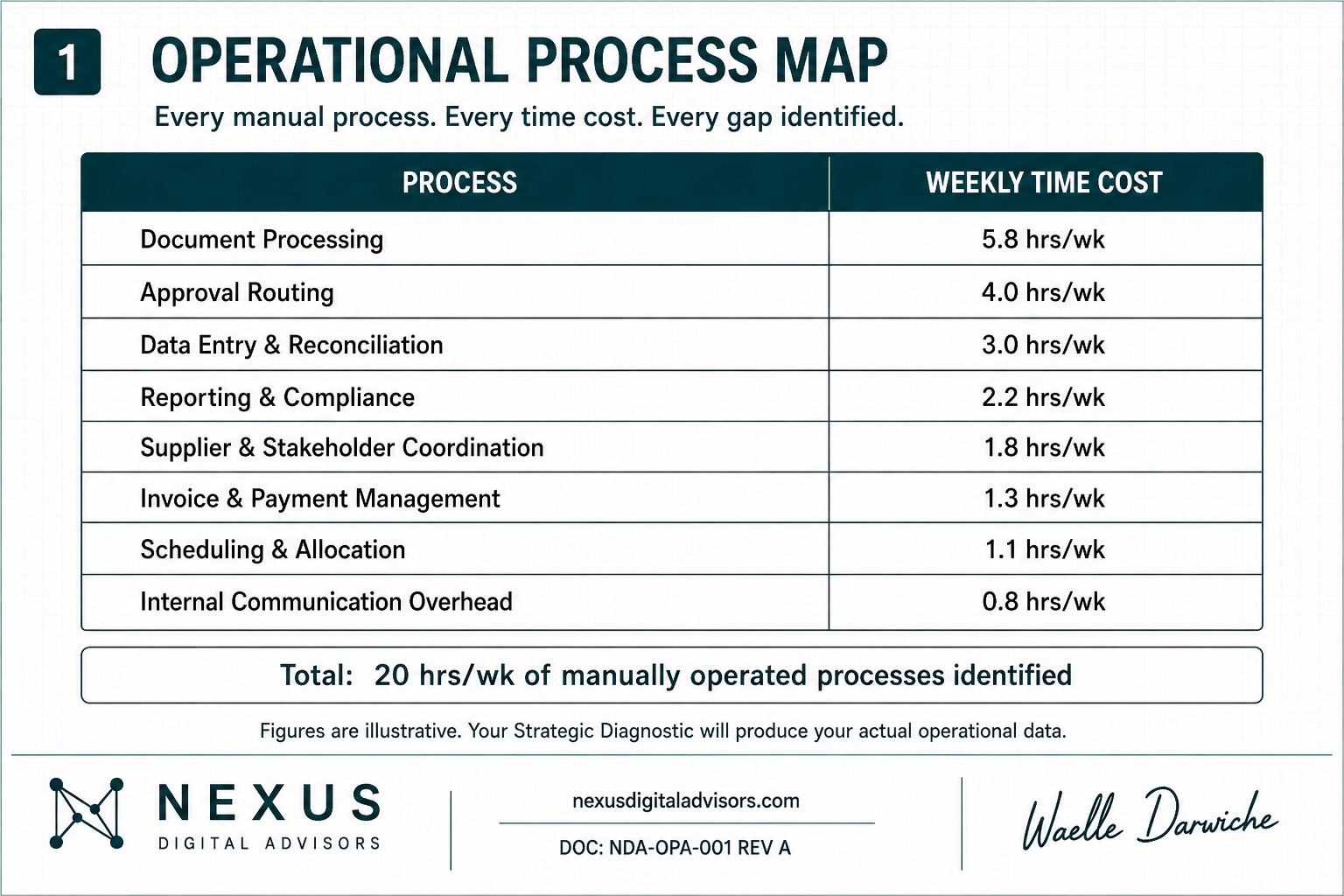
time cost assigned to each. In a typical 12-person business this adds up to around 20
hours a week — half a person's time absorbed by work that should not require a human.
(Map 2 of 4)
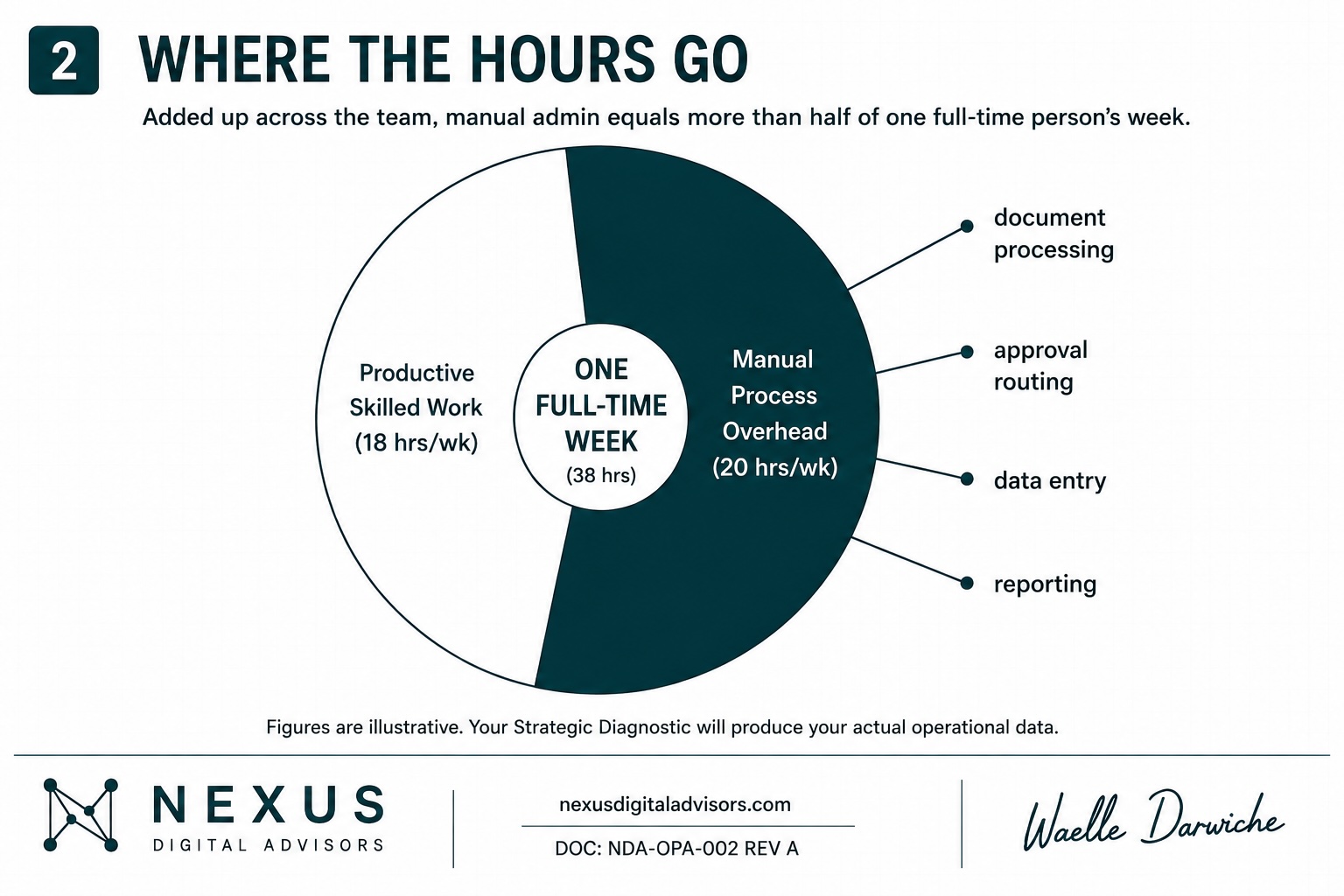
feels small. Together they represent a meaningful share of your team's available time,
spent on processes a system could run.
(Map 3 of 4)
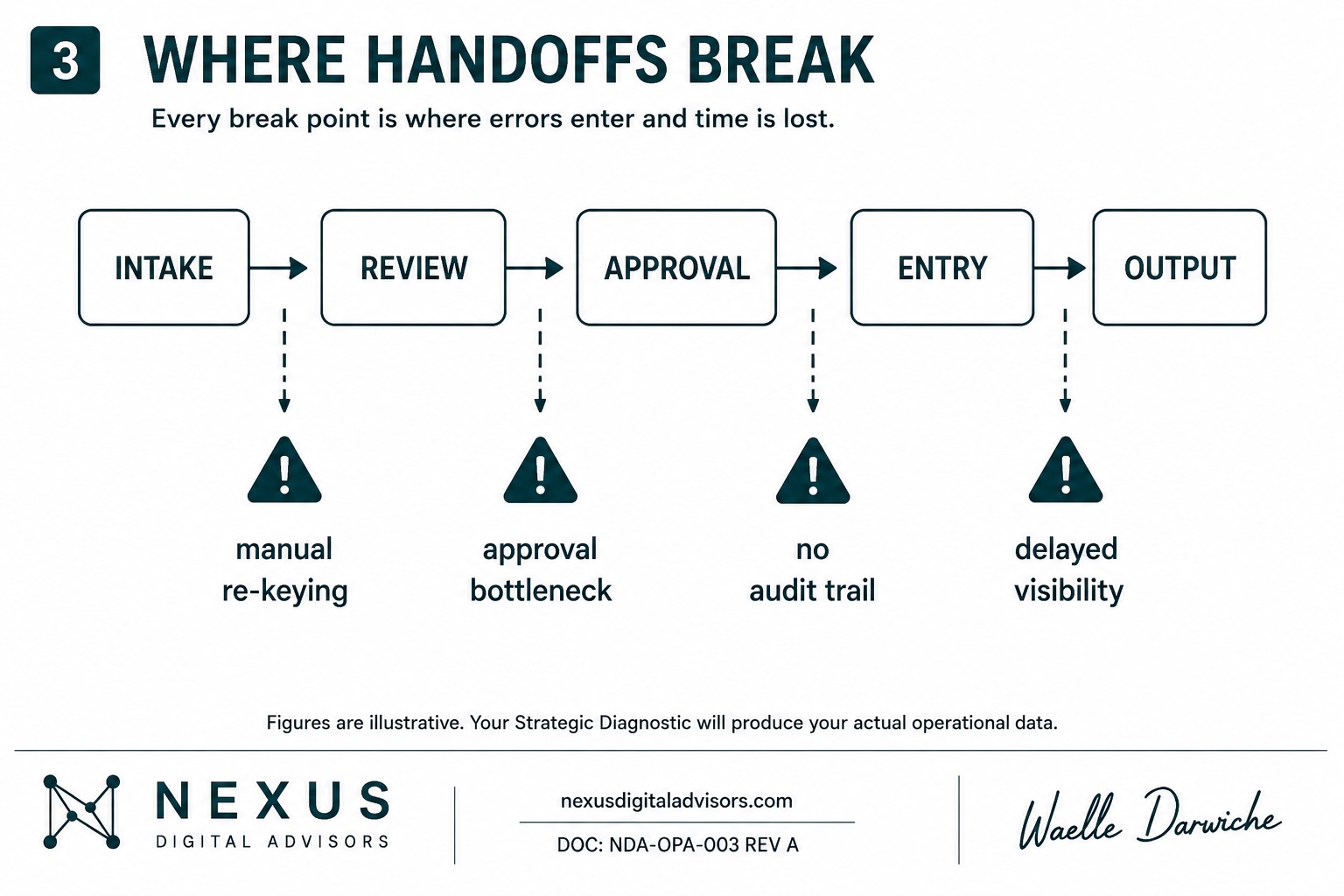
tasks, at the handoff. Every break point is where information is re-keyed, approvals stall,
and visibility is lost.
(Map 4 of 4)
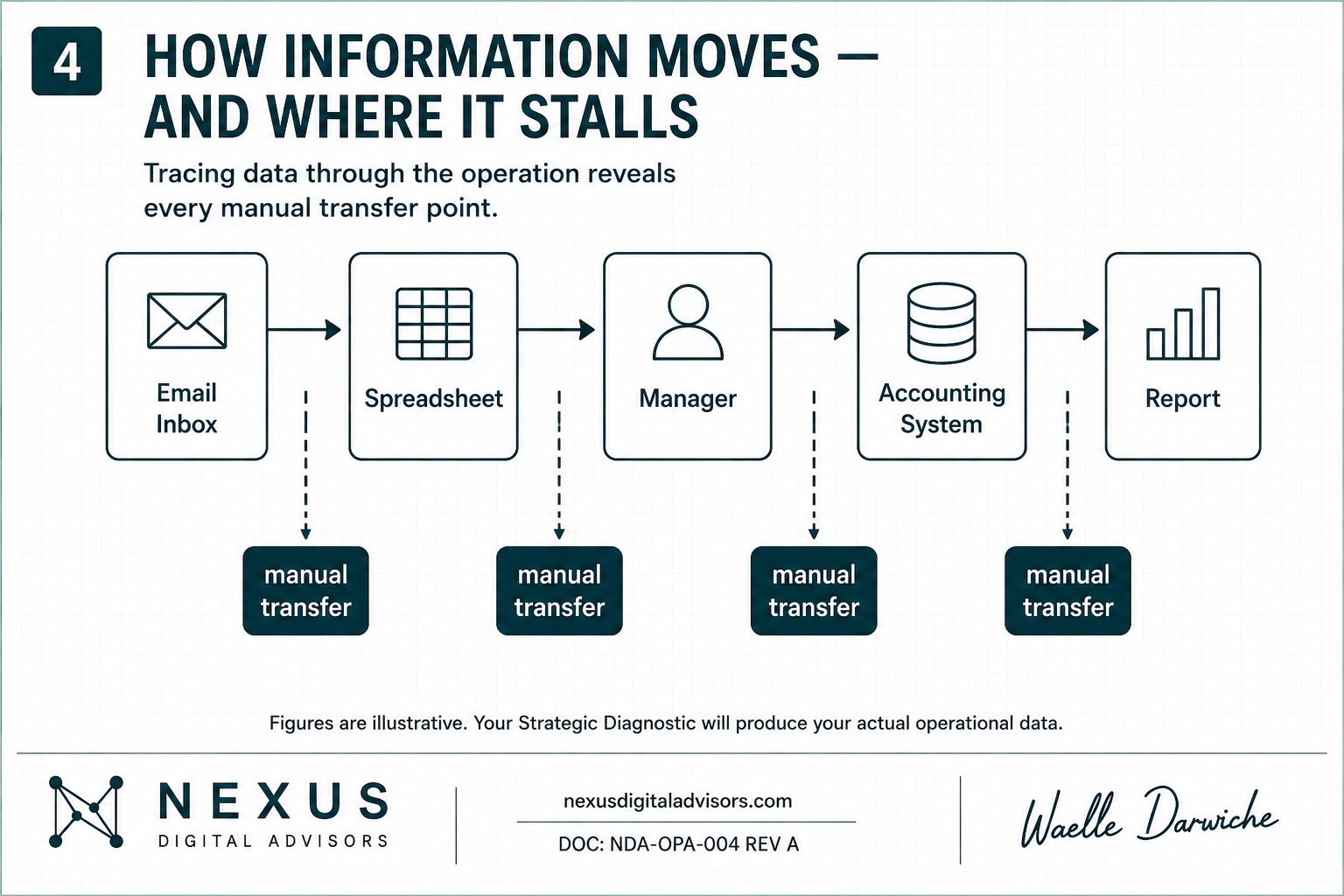
must be manually carried from one system to the next. Each manual transfer is a place
where time is lost and errors enter.
02 — Gap Identification & Priority Ranking
(Map 1 of 4)
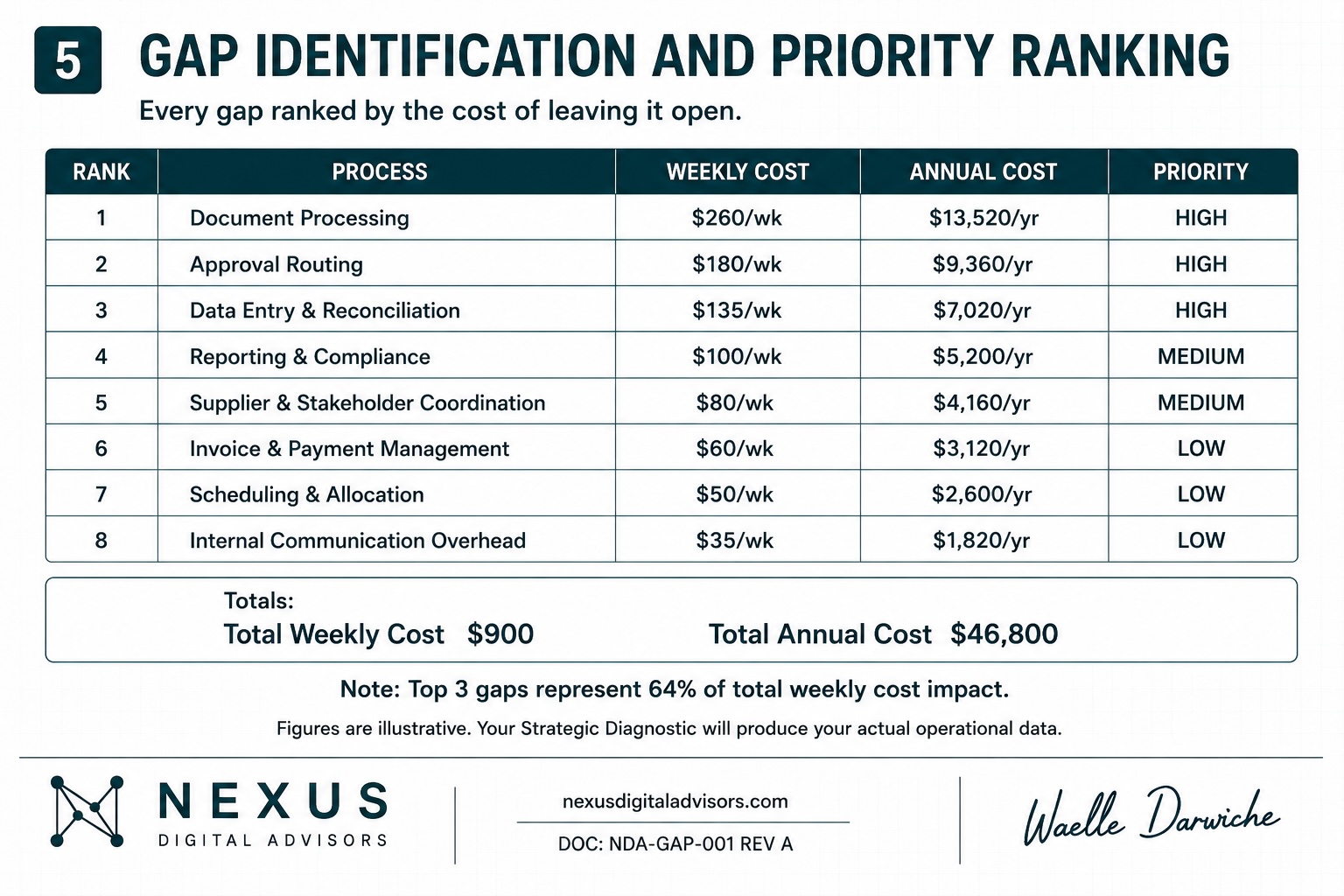
total reaches $900 per week — around $46,800 a year — with the top three gaps
accounting for nearly two thirds of the impact.
(Map 2 of 4)
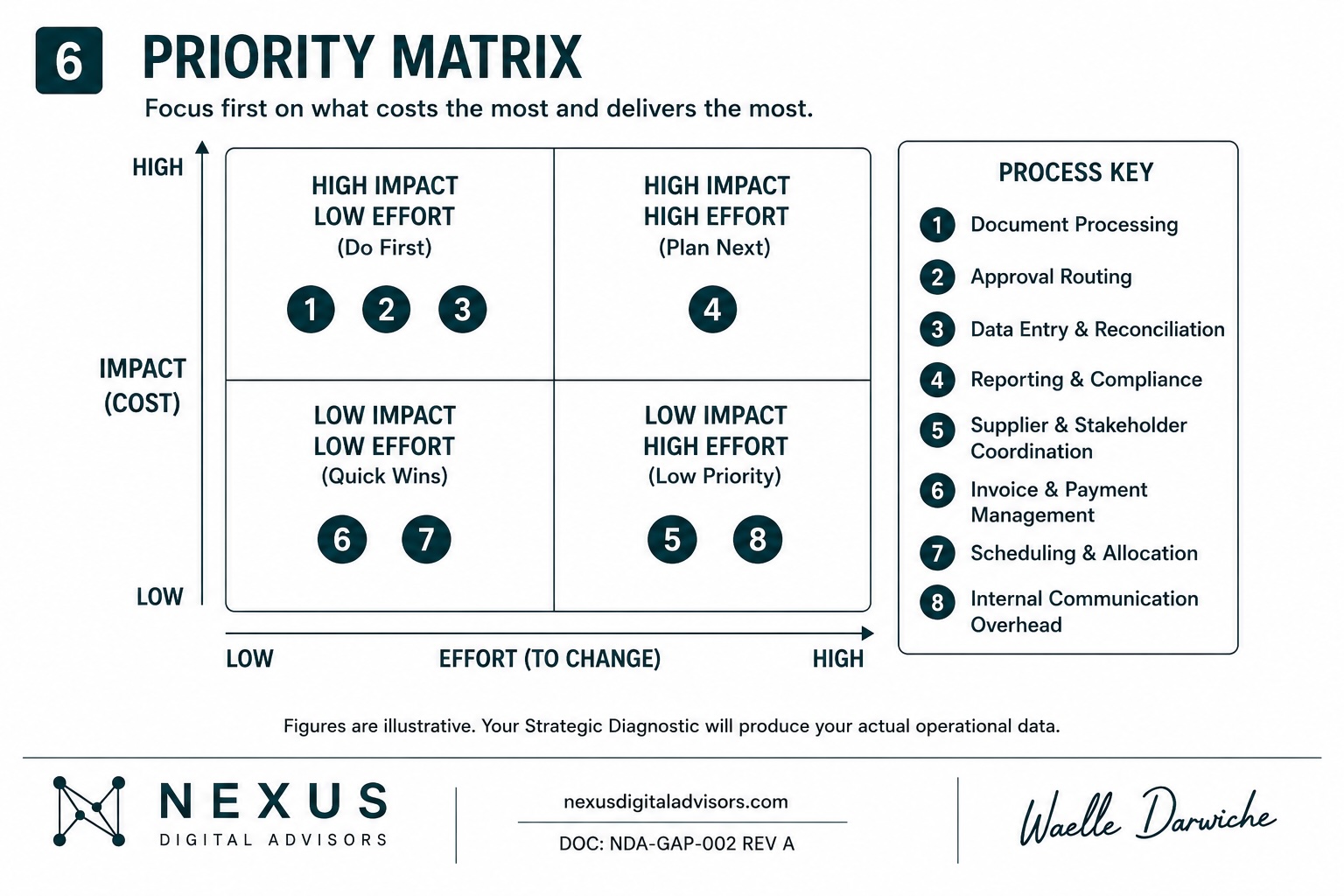
upper-left — high impact, low effort — are where we begin. Maximum return, fastest
path.
(Map 3 of 4)
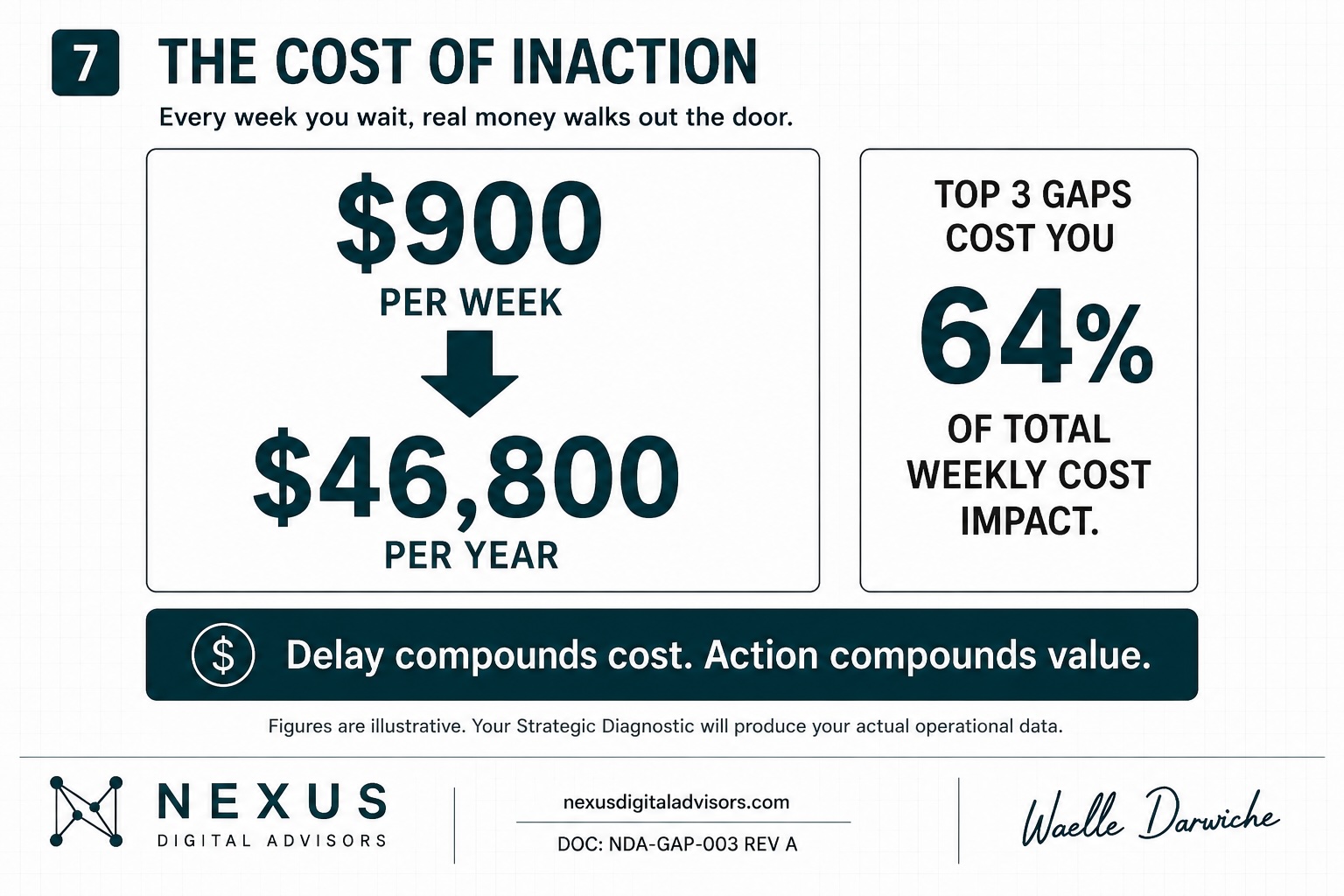
until it is annualised. Every week a gap stays open, that cost compounds.
(Map 4 of 4)
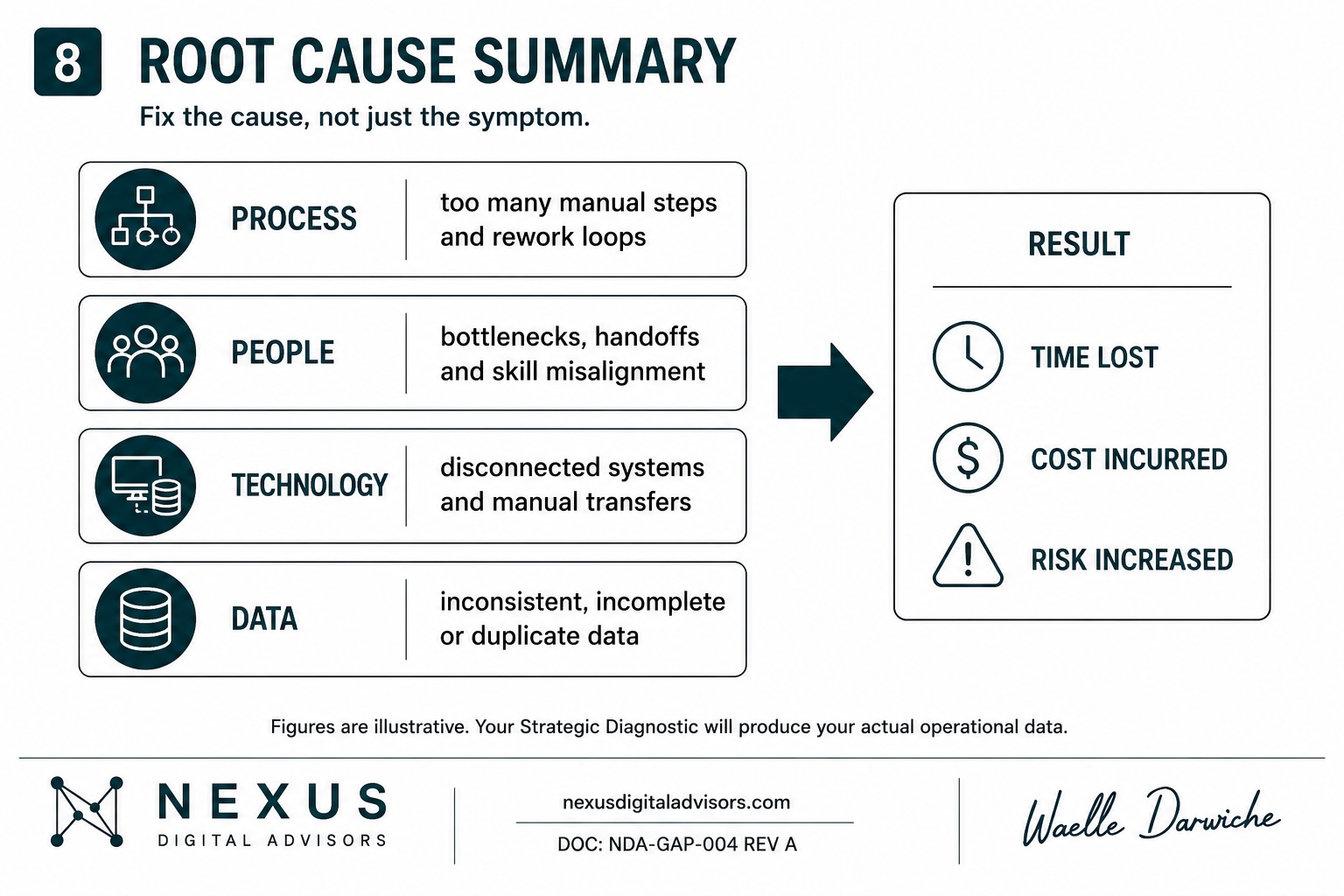
technology and data. We fix the cause, not just the symptom, so the gap does not reopen.
03 — Automation Specification & Cost Assignment
(Map 1 of 4)
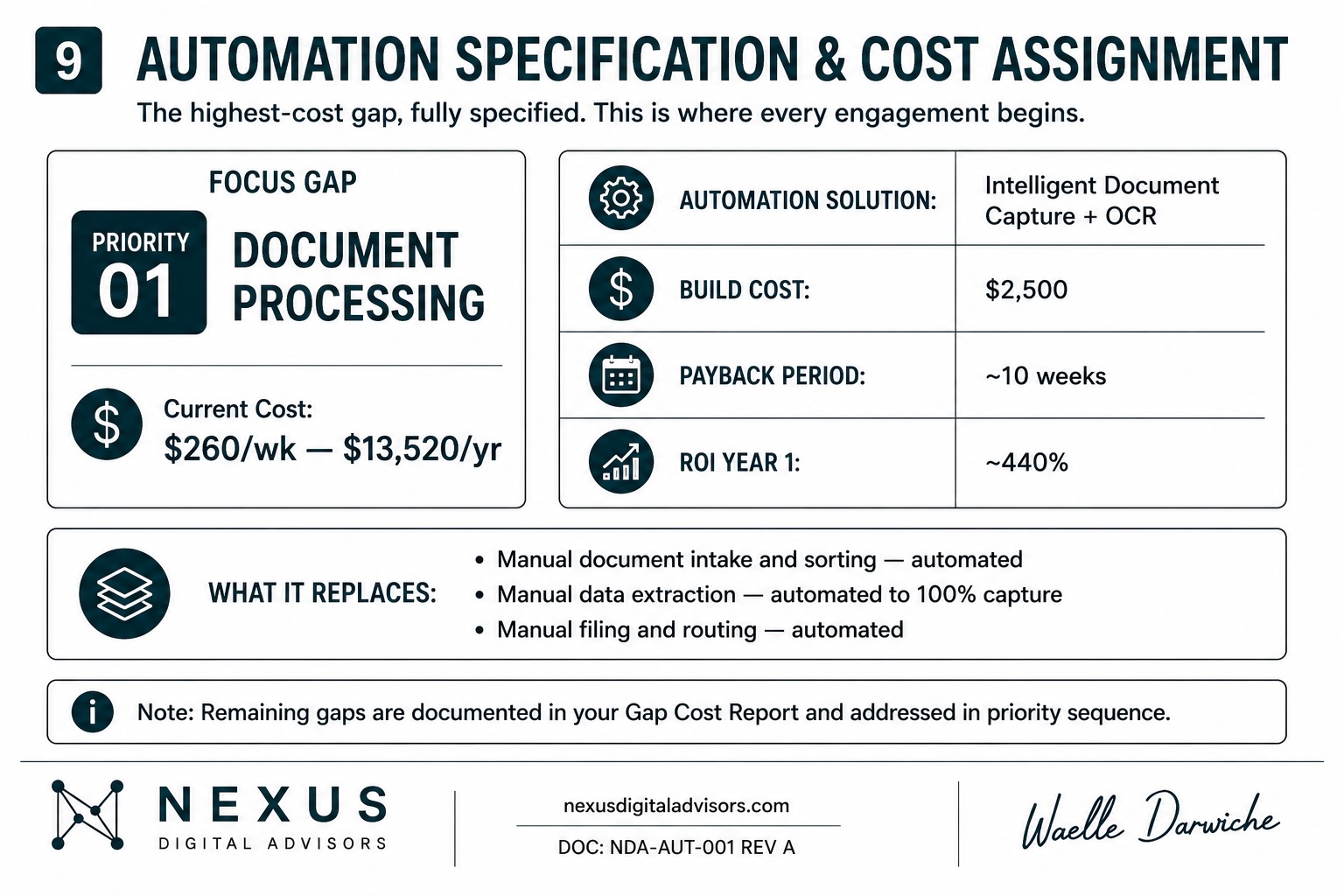
gap in this example — the solution, the build cost, the payback period and the first-year
return are defined before any work begins.
(Map 2 of 4)
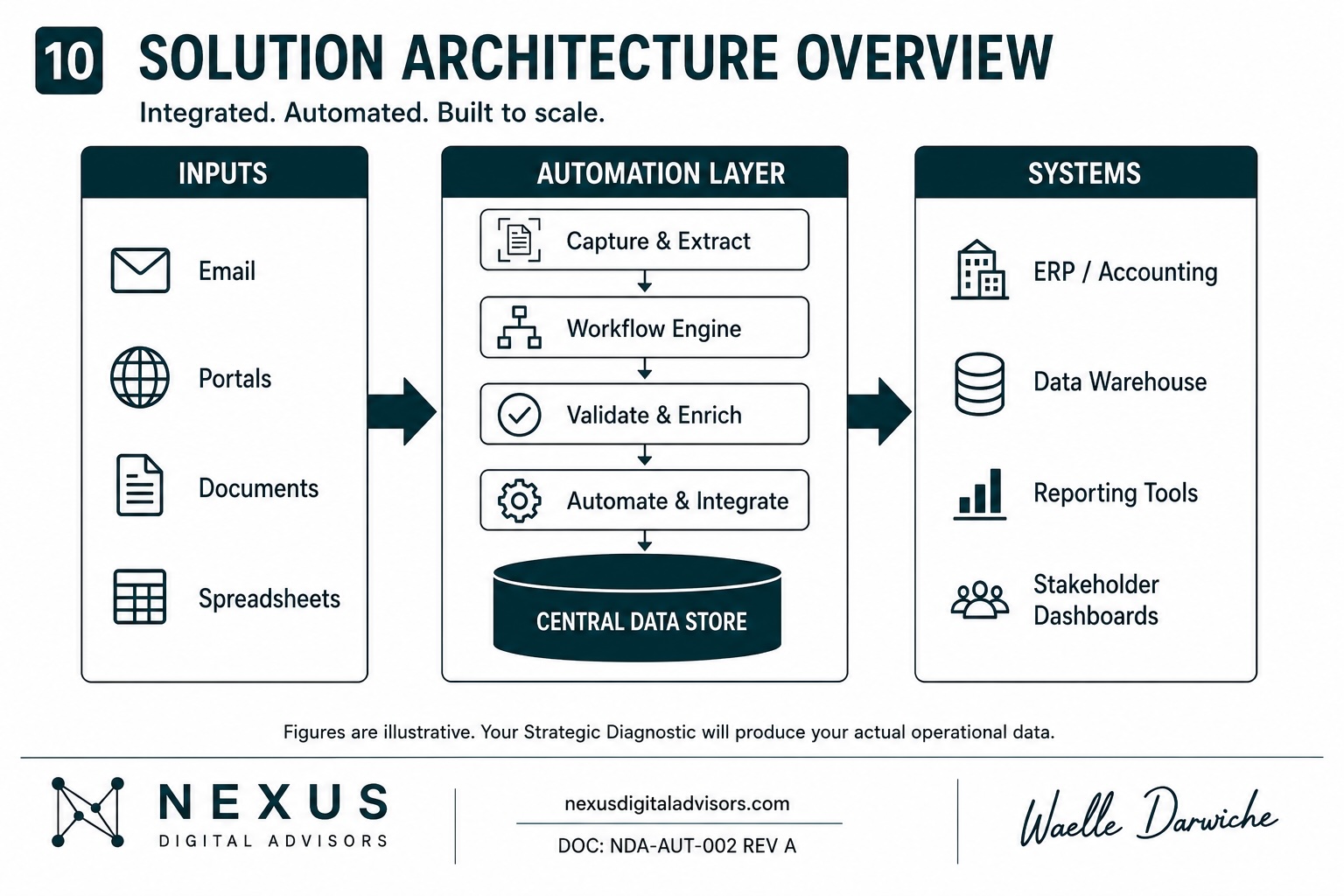
your existing systems, with a central data store connecting everything. Built to integrate,
not to replace what already works.
(Map 3 of 4)
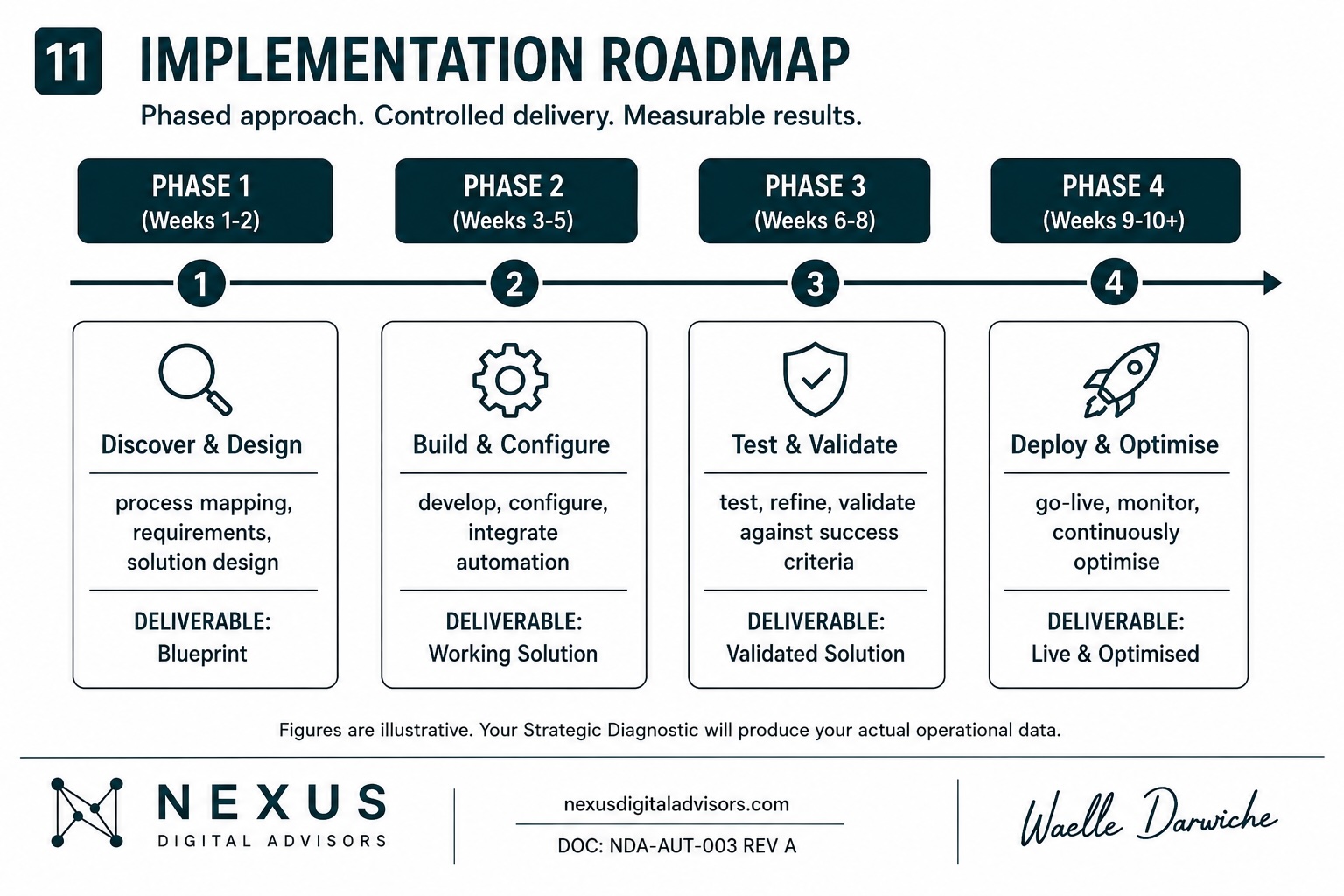
configure, test and validate, then deploy and optimise — each phase with a defined
deliverable.
(Map 4 of 4)
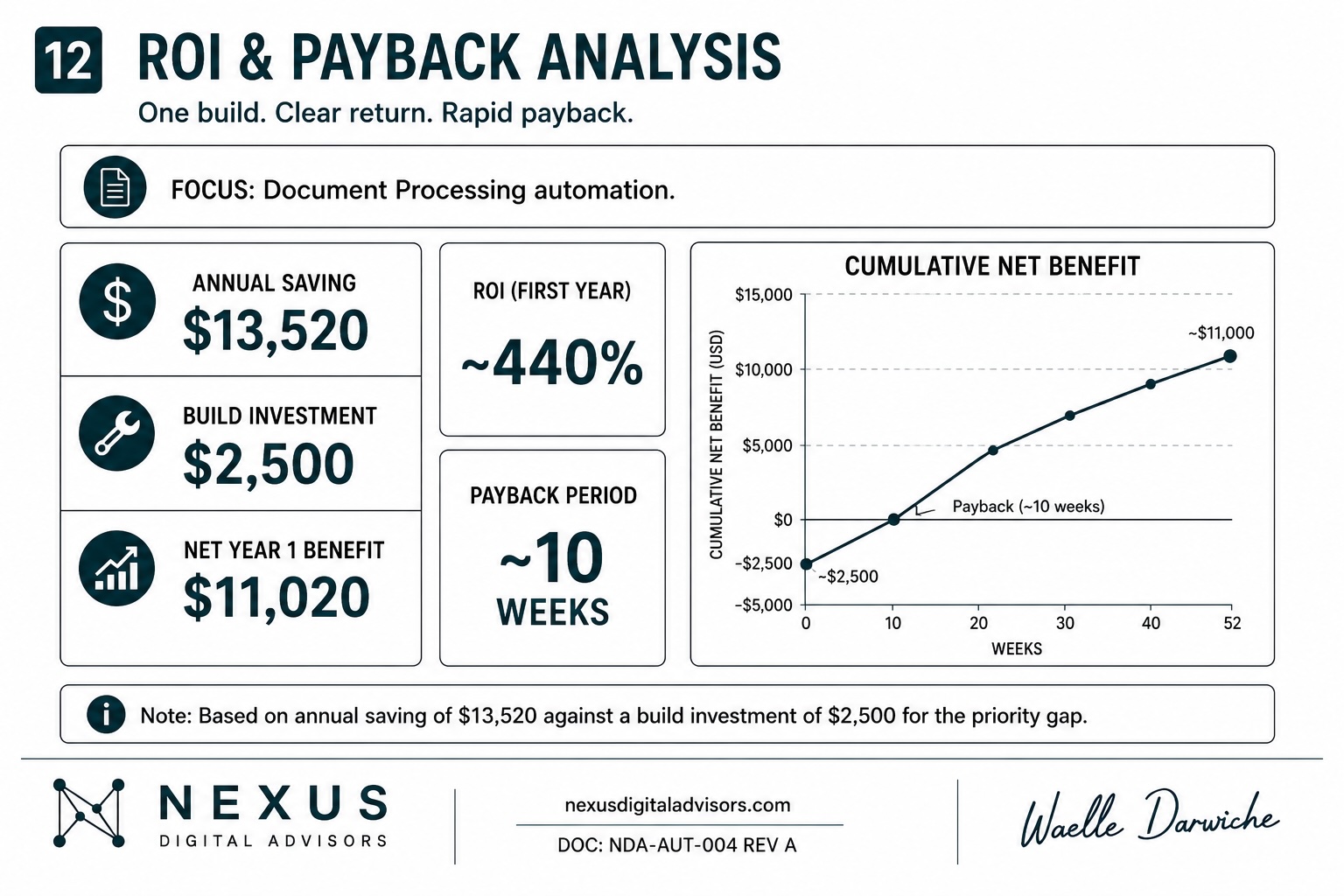
returns roughly $13,500 a year, paying for itself in about ten weeks. The remaining gaps
are addressed in sequence as the next priorities.